Haitian TPS Holders in Miami Gardens Are Living in Fear. Here's What's Happening and Where to Get Help.
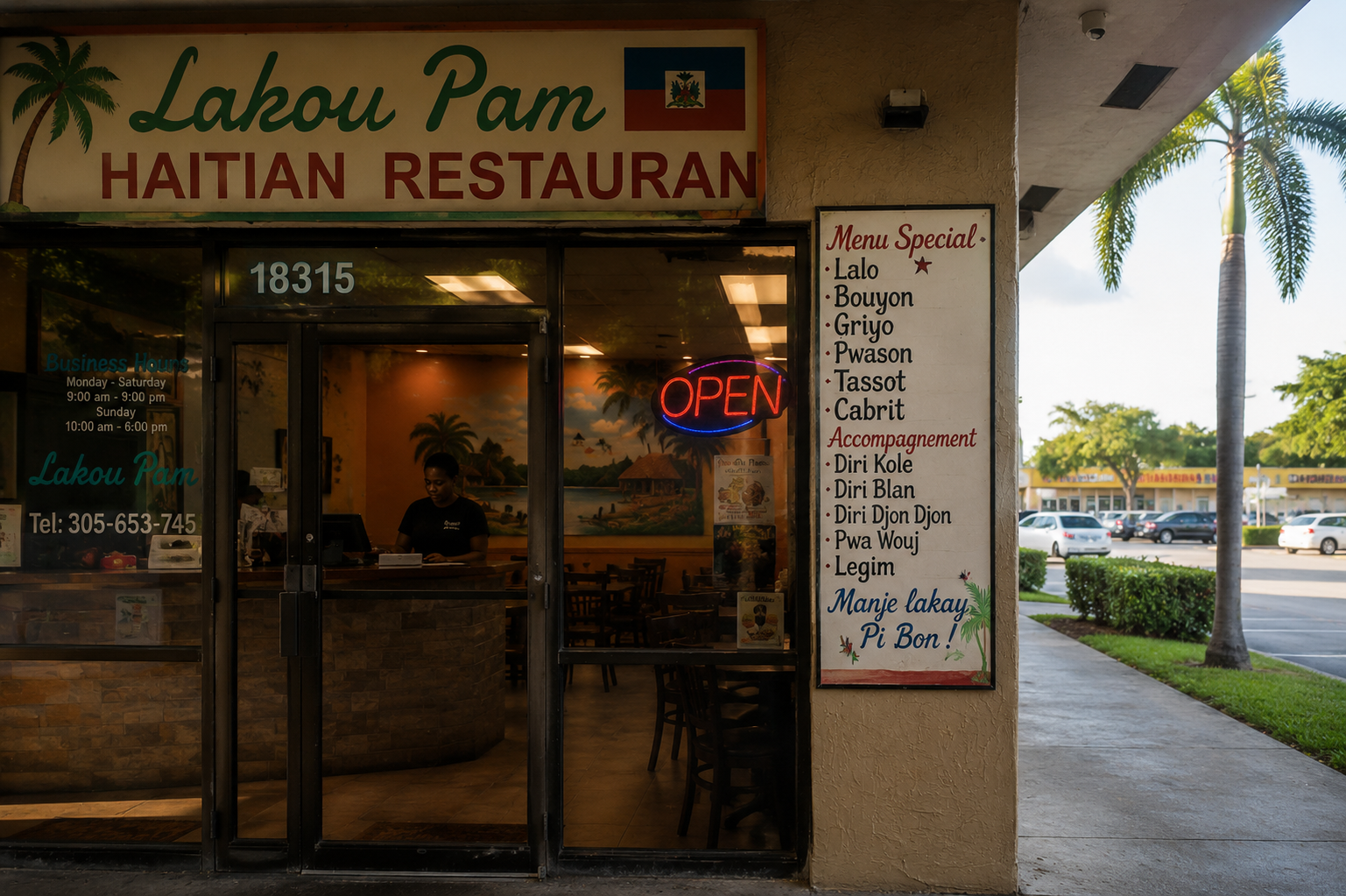
At a Haitian restaurant in Miami Gardens, only one employee showed up for work on a recent day. The rest stayed home out of fear.
CBS Miami visited a Haitian restaurant in Miami Gardens recently and found one person working. One. The rest of the staff, all Haitian TPS holders, hadn't come in. The woman behind the counter, speaking in Haitian Creole, told the reporter something that should sit with every person who reads this: "I'm fearful, afraid to run errands, afraid to get pulled over. Sometimes I take the bus to work so I'm not putting myself in danger."
She has Temporary Protected Status. She has a valid work permit. She's been living and working legally in the United States for years. And she's taking the bus instead of driving because she's afraid that a traffic stop could change her life forever.
This is happening right now in our city. Not in an abstract policy debate. Not in a cable news panel. On NW 27th Avenue. In the restaurants where we eat. In the homes next door. This article explains what's happening with Haitian TPS, what the current legal status is, what your rights are, and where to find help if you or someone you know is affected.
What is TPS and why are Haitian holders at risk?
Temporary Protected Status is a federal program that allows people from countries experiencing armed conflict, natural disasters, or other extraordinary conditions to live and work legally in the United States. Haiti was designated for TPS in 2010 after a devastating earthquake killed an estimated 220,000 people and displaced 1.5 million. TPS for Haitians has been extended by every administration since, including Trump's first term and Biden's term.
In November 2025, the current administration's Department of Homeland Security, led by Secretary Kristi Noem, announced the termination of Haiti's TPS designation, effective February 3, 2026. The reasoning: Haiti, in DHS's assessment, no longer meets the statutory conditions for TPS. The State Department simultaneously classifies Haiti as a Level Four travel advisory ("Do Not Travel") due to gang violence and instability. Those two positions exist simultaneously and without apparent contradiction in the official record.
Approximately 350,000 Haitian nationals hold TPS in the United States. Another 150,000 have pending applications. A significant concentration of these individuals live in South Florida, including Miami Gardens, where the Haitian community has been a pillar of the city's cultural and economic life for decades.
Where things stand legally: May 2026
On February 2, 2026, one day before TPS was set to terminate, Federal Judge Ana Reyes in the U.S. District Court for the District of Columbia issued an emergency order blocking the termination. That order remains in effect. As of today, Haitian TPS holders retain their protected status and work authorization.
But the clock is now ticking toward a definitive answer. The administration appealed to the Supreme Court, and on April 29, the justices heard oral arguments. CNN reported that the six-justice conservative majority signaled during arguments that it will likely side with the administration. Several justices questioned whether federal courts even have the authority to review TPS termination decisions. If the court adopts that position, it wouldn't just affect Haitians. It would remove judicial review from TPS decisions for all 17 designated countries, affecting over 1 million people nationwide.
A ruling is expected by end of June or early July 2026. If you're doing the math and realizing that overlaps with the World Cup at Hard Rock Stadium, you're right. The Supreme Court could strip protections from 330,000 Haitian nationals during the same weeks that Miami Gardens is hosting matches for teams from Brazil, Colombia, Portugal, and other nations with large South Florida diaspora communities.
The lower court's ruling also found evidence that the termination was motivated in part by racial animus. Justice Sotomayor raised this during oral arguments, citing the president's past statements about Haiti. Whether the equal protection argument survives the conservative majority's skepticism remains uncertain.
Meanwhile, the House passed a bill in April extending TPS through 2029 (224-204 vote, 10 Republicans joining Democrats). Representative Ayanna Pressley forced the floor vote through a discharge petition. The White House said Trump would veto it. A coalition of 19 state attorneys general filed an amicus brief urging the Supreme Court to preserve the block on termination.
The stakes in numbers: Haitian TPS holders contribute an estimated $3.4 billion annually to the U.S. economy. Roughly 50,000 U.S. citizen children have at least one parent with Haitian TPS. Seventy-five thousand TPS-eligible Haitians work in industries already facing labor shortages.
What this looks like in Miami Gardens
The statistics describe the national picture. What's happening on the ground in Miami Gardens is more immediate.
Haitian TPS holders in our community are changing their routines in ways that affect everything around them. People are driving less, afraid that a broken taillight could turn into an immigration encounter. Parents are pulling children out of school, contributing to the enrollment decline that's now forcing Miami-Dade to close nine schools. Workers are calling in sick or quitting jobs entirely. Restaurants and businesses that depend on Haitian employees are operating short-staffed.
CBS Miami reported that DHS, in a filing to the court, stated it has "no specific plans" to deploy ICE agents in communities with large Haitian populations like Miami Gardens. But the same filing added that the department would have enforced immigration laws after the TPS termination if the court hadn't blocked it. That conditional reassurance convinced approximately nobody.
Miami Gardens Councilwoman Linda Julien, who is Haitian American, told CBS Miami that she's working to support the community during this uncertain period. But a city council member's support, while meaningful, cannot override federal immigration policy. The gap between local solidarity and federal enforcement is where the fear lives.
One detail from the CBS report deserves attention: some Haitian TPS holders whose driver's licenses have expired are currently unable to renew them through normal channels. This means people with valid work permits and legal status cannot drive legally, creating a Catch-22 where going to work by car becomes a legal risk even though working itself is permitted.
Your rights as a TPS holder
If you hold Haitian TPS, here is what you need to know about your legal rights as of May 2026. This is general information, not legal advice. Consult an immigration attorney for guidance specific to your case.
Your TPS is currently valid. The federal court's order blocking the termination means your status and work authorization remain in effect. You are legally present in the United States and legally authorized to work.
You have the right to remain silent. If approached by law enforcement, you are not required to answer questions about your immigration status, country of origin, or how long you've been in the U.S. You must provide identification if asked during a lawful stop, but nothing beyond that.
You have the right to refuse a search. Unless an officer has a warrant or probable cause, you may decline a search of your person, vehicle, or home.
You have the right to an attorney. If detained by immigration authorities, you have the right to speak with an attorney before answering questions. Ask for a lawyer immediately and exercise your right to remain silent until one is present.
You have the right to contact your consulate. The Haitian Consulate in Miami can provide assistance to nationals who are detained or facing legal proceedings.
Where to get free legal help in South Florida
Several organizations provide free or low-cost immigration legal services to Haitian TPS holders in the Miami area:
Haitian Bridge Alliance (haitianbridge.org) is the lead organization in the national legal fight to preserve Haitian TPS. They offer legal referrals, community resources, and case-specific guidance.
Americans for Immigrant Justice (aijustice.org) provides free legal representation to immigrants in South Florida, including TPS holders facing status uncertainty.
Catholic Charities Legal Services, Archdiocese of Miami offers immigration legal assistance regardless of religious affiliation.
Florida Immigrant Coalition (floridaimmigrant.org) provides know-your-rights trainings, legal referrals, and community organizing support.
ACLU of Florida (aclufl.org) operates a hotline and provides legal resources for individuals whose rights have been violated during immigration enforcement encounters.
What the community can do
If you're a Miami Gardens resident who isn't directly affected by TPS but wants to support your neighbors, here's what actually helps:
Eat at Haitian restaurants. Businesses in the community are losing staff and customers simultaneously. Spending money at Haitian-owned restaurants and shops on 27th Avenue is direct economic support.
Share accurate information. Misinformation about TPS status, deportation raids, and legal rights spreads fast in group chats and on social media. Share this article or resources from the organizations listed above. Accurate information reduces panic.
Don't ask people about their status. Even with good intentions, asking a neighbor or coworker about their immigration situation puts them in an uncomfortable position. If someone wants to share, they will. Otherwise, treat them like what they are: your neighbor.
Attend school board and city council meetings. The enrollment drop that's closing schools and the workforce shortages affecting local businesses both connect to this issue. Speaking up at public meetings keeps the community impact visible to elected officials who might otherwise treat immigration as a federal-only concern.
Frequently asked questions
Is Haitian TPS still active in 2026?
Yes, as of May 12, 2026. A federal judge blocked the termination in February 2026, and TPS holders retain their protected status and work authorization. However, the U.S. Supreme Court heard oral arguments on April 29 and is expected to rule by early July 2026. CNN reported that the conservative majority signaled it may side with the administration. The long-term future of Haitian TPS is in serious doubt.
Can ICE deport Haitian TPS holders right now?
While the court order blocking TPS termination is in effect, Haitian TPS holders are legally protected from deportation based on their TPS status. DHS has stated it has "no specific plans" to deploy ICE in communities with large Haitian populations. However, individuals who have committed certain crimes or who have other immigration violations may still be subject to enforcement actions independent of TPS.
How many Haitian TPS holders are in Miami Gardens?
Exact numbers for Miami Gardens specifically are not publicly available. Nationally, approximately 350,000 Haitian nationals hold TPS, with an additional 150,000 applications pending. South Florida, including Miami Gardens, is one of the largest concentration areas for Haitian TPS holders in the country.
Where can Haitian TPS holders get free legal help in Miami?
Free legal services for Haitian TPS holders are available from: Haitian Bridge Alliance (haitianbridge.org), Americans for Immigrant Justice (aijustice.org), Catholic Charities Legal Services of the Archdiocese of Miami, the Florida Immigrant Coalition (floridaimmigrant.org), and the ACLU of Florida (aclufl.org). Avoid unlicensed "notarios" who charge fees for immigration services.
Did the House vote to extend Haitian TPS?
Yes. On April 16, 2026, the U.S. House of Representatives voted 224-204 to extend TPS for Haitian nationals through 2029, with 10 Republicans joining Democrats. However, the White House said President Trump would veto the bill. The legislation's path through the Senate remains uncertain.
This article provides general information, not legal advice. For guidance specific to your situation, consult a licensed immigration attorney or contact one of the free legal services listed above. Sources: CBS Miami, CNN, NPR, USCIS, American Immigration Council, National Immigration Forum, Democracy Now!, Bloomberg, Haitian Bridge Alliance. Supreme Court oral argument reporting from CNN (April 29, 2026). See also: Miami-Dade school closures (connected to enrollment decline) and World Cup travel advisory. Published: May 12, 2026.