Before It Was Miami Gardens: The Story of Carol City
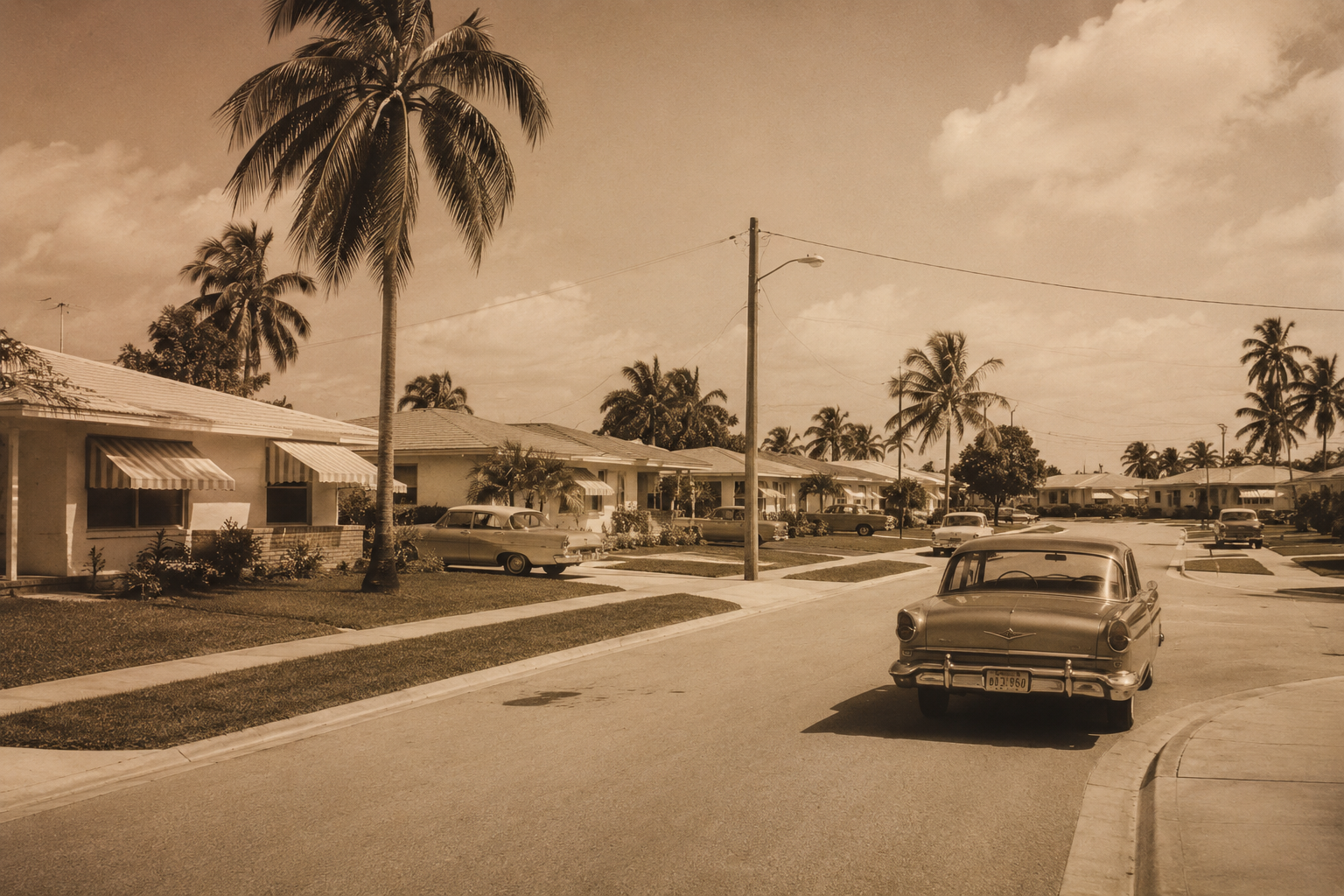
Before Miami Gardens incorporated in 2003, there was Carol City: farmland turned suburb, home to generations of families and a launching pad for cultural icons.
Today it's part of Miami Gardens, but for half a century before the city existed, this stretch of North Miami-Dade had its own name and its own identity: Carol City. It's a neighborhood with a surprising origin story, deep community roots, and a cultural legacy that reaches far beyond South Florida. In our ongoing look at the neighborhoods that shaped our city, here's the story of Carol City.
From farmland to suburb
In the mid-20th century, the land that would become Carol City was mostly just that: land. Farmland stretched across this part of unincorporated Miami-Dade County, northwest of Miami and roughly midway between Miami and Fort Lauderdale. Then came the postwar suburban boom, and a developer named Julius Gaines saw potential in those fields.
Beginning around the late 1940s and into the 1950s and 1960s, Gaines transformed the agricultural land into a planned suburban community: tree-lined streets, spacious ranch-style homes, and the kind of family-friendly neighborhood that defined mid-century American suburbia. Families moved in, schools were built, and a community took shape on what had recently been open farmland.
The name that almost wasn't
Here's the fun part, and one of the best pieces of local trivia around. Carol City was very nearly called something else entirely. Developer Julius Gaines originally wanted to name his new community Coral City. There was just one problem: the nearby, well-established City of Coral Gables took issue with the similar name and reportedly threatened legal action.
Rather than fight it, Gaines came up with an elegantly simple solution. He switched the "O" and the "A" in Coral, turning it into Carol. And so Carol City was born, its name the product of a clever bit of wordplay to sidestep a legal headache. Generations later, most residents have no idea their neighborhood's name began as a workaround.
Growth through the decades
Carol City grew quickly. Miami Carol City Senior High School opened in the fall of 1963, becoming an anchor institution for the community. Through the following decades, the population climbed steadily as more families put down roots:
| Year | Population (approx.) |
|---|---|
| 1970 | 21,749 |
| 1980 | 47,349 |
| 1990 | 61,233 |
Over these decades, Carol City evolved into a vibrant, predominantly African American community, part of the broader transformation of North Miami-Dade into one of the most significant Black communities in Florida. It became a place where families built lives, raised children, and created the tight-knit community bonds that still define it today.
A cultural powerhouse
For a neighborhood its size, Carol City has produced an outsized amount of talent. It's become especially well known as a cradle of hip-hop and a launching pad for athletes who reached the highest levels of their sports. Perhaps most famously, Grammy-nominated rapper and mogul Rick Ross was raised in Carol City, and he has repeatedly credited the neighborhood as central to his identity and story, even investing back into the area today. Carol City's cultural fingerprint, in music, sports, and beyond, is a genuine source of local pride.
Becoming part of Miami Gardens
For decades, Carol City existed as an unincorporated community and a census-designated place, meaning it wasn't part of any city and was governed directly by the county. That changed in 2003. Carol City became one of the seven original neighborhoods that came together to incorporate as the City of Miami Gardens, alongside Andover, Bunche Park, Lake Lucerne, Norland, Opa-locka North, and Scott Lake.
Together, these communities formed what would become the largest city in Florida with a majority Black population. Carol City brought its people, its history, and its identity into the new city, helping lay the foundation for the Miami Gardens we know today. While the U.S. Census stopped tracking Carol City as a separate place after incorporation, its name and community spirit remain very much alive.
Carol City today
Carol City remains one of the most established and recognizable neighborhoods in Miami Gardens, known for its single-family homes, family-oriented atmosphere, and cultural richness. It carries its history forward while sharing in Miami Gardens' momentum, from new development to major events at nearby Hard Rock Stadium. Understanding where Carol City came from makes it easier to appreciate the community it is today, and the city it helped build.
Frequently asked questions
Why is it called Carol City?
Developer Julius Gaines originally wanted to name the community Coral City, but the nearby City of Coral Gables reportedly threatened legal action over the similar name. Gaines solved the problem by switching the "O" and "A" in Coral, creating the name Carol City.
Is Carol City part of Miami Gardens?
Yes. Carol City was one of the seven original neighborhoods that incorporated to form the City of Miami Gardens in 2003, along with Andover, Bunche Park, Lake Lucerne, Norland, Opa-locka North, and Scott Lake. Before that, it was an unincorporated community and census-designated place in Miami-Dade County.
Who is from Carol City?
Carol City is well known as a cradle of hip-hop and athletic talent. Most famously, rapper and entrepreneur Rick Ross was raised in Carol City and has credited the neighborhood as central to his identity, later investing in development in the area.
Historical details from public records and local history sources including Miami-Dade County history and U.S. Census data. Published: August 22, 2026.