Built by Heroes: The Remarkable History of Bunche Park
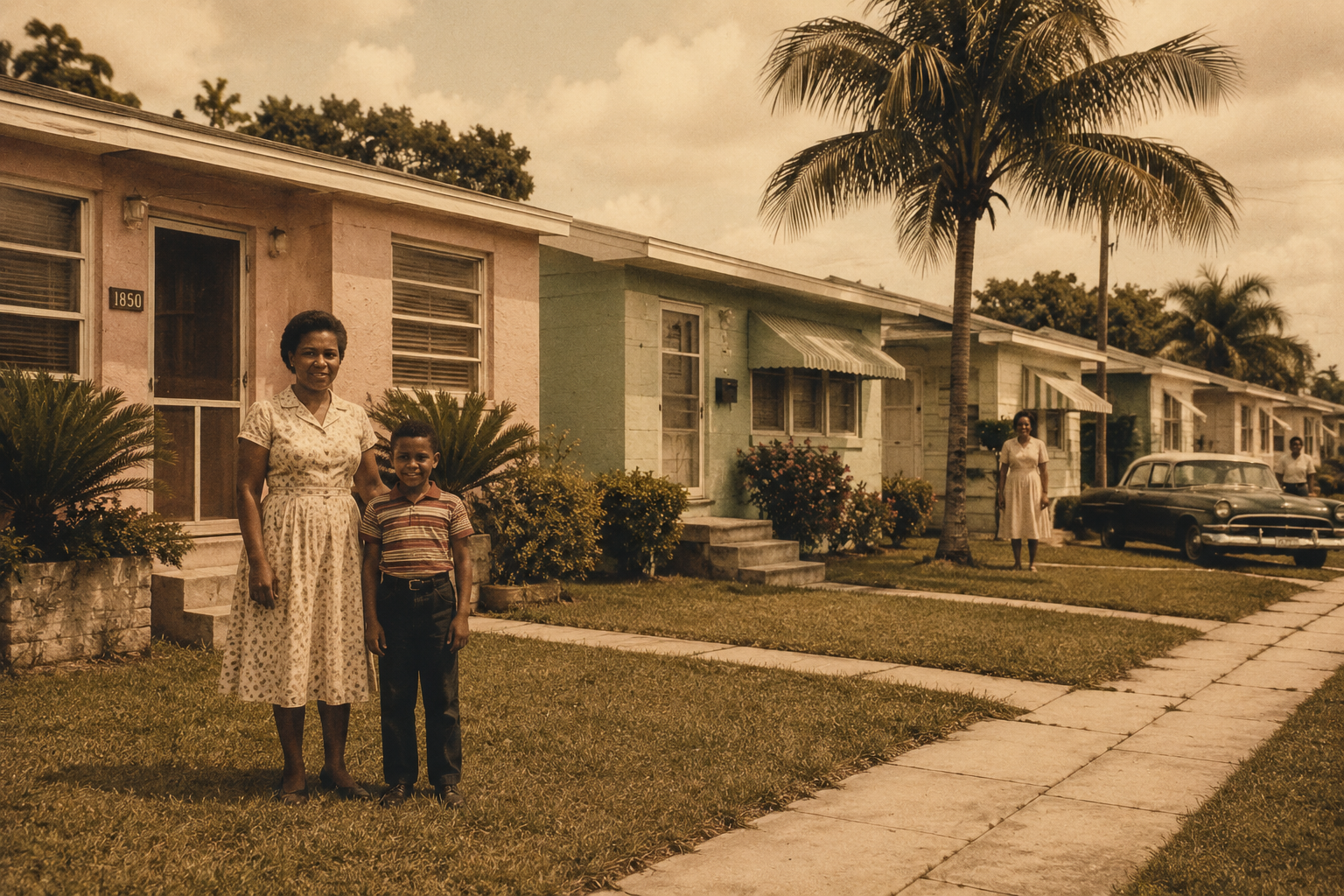
Founded for returning Black World War II veterans and named after a Nobel Peace Prize winner, Bunche Park holds one of the most inspiring stories in Miami Gardens history.
Some neighborhoods are just places to live. Bunche Park is something more: a living monument to American heroism and perseverance. Founded for returning Black World War II veterans and named after one of the great figures of the 20th century, this small but mighty Miami Gardens neighborhood holds a history that deserves to be far better known. Continuing our look at the communities that built our city, here's the remarkable story of Bunche Park.
A neighborhood built for heroes
The story begins in the years right after World War II. Between roughly 1946 and 1951, Bunche Park was developed as one of South Florida's first postwar suburbs specifically for Black World War II veterans. When these servicemen returned home from defending freedom abroad, they came back to a country where segregation still limited where they could live and what they could own. Bunche Park offered something powerful: a place where Black veterans could finally own homes, raise families, and build community on their own terms.
Developers constructed modest two- and three-bedroom bungalows that returning servicemen could purchase with little or no down payment using their G.I. Bill benefits. It was part of the most significant postwar housing boom for Black residents in the Miami area, a period when the region's Black population grew dramatically, from roughly 47,500 in 1940 to about 80,000 by 1950. For many families, a home in Bunche Park was the American Dream made real.
The man behind the name
The neighborhood bears the distinguished name of Dr. Ralph Bunche, and it's hard to overstate what an honor that is. Dr. Bunche was a towering figure in American diplomacy and civil rights. In 1950, he became the first African American to receive the Nobel Peace Prize, awarded for his work mediating the 1949 armistice agreements in the Middle East. He served as the first African American to hold the role of United Nations deputy Secretary-General and was, in the decades between the 1940s and 1960s, a household name and a source of immense pride, particularly for Black Americans.
Naming the neighborhood after Dr. Bunche connected this community of veterans to a legacy of excellence, dignity, and achievement on the world stage. It was a statement about who these residents were and what they represented.
A community takes root
As families moved in, institutions followed. Bunche Park Elementary School opened in 1952 and has been a pillar of the community ever since, educating generations of local children. In the early days, the area was still developing, and some residents recall when there was little around but open land. But the community grew strong, anchored by homeownership, schools, and a deep sense of shared purpose.
One name stands out in Bunche Park's community story: Corrine Dunn. A longtime, proud resident whose family moved to the neighborhood in the early 1950s, Dunn became a devoted champion of Bunche Park, working to promote and preserve its history. Her contributions were honored with a street bearing her name, Corrine Dunn Street, a fitting tribute to a lifetime of community leadership.
A diverse community today
Over the decades, Bunche Park has grown into a wonderfully diverse community while holding onto its historic character. Today it's home to a rich mix of residents, including a notable Bahamian community, along with African American, Haitian, and South American families. Local life centers on small businesses, restaurants, markets, and the tight neighborly bonds that have defined the area since its founding. It remains primarily a residential neighborhood with a strong sense of identity.
Part of the foundation of Miami Gardens
In 2003, Bunche Park became one of the seven original neighborhoods that came together to incorporate as the City of Miami Gardens, alongside Carol City, Andover, Lake Lucerne, Norland, Opa-locka North, and Scott Lake. Each brought its own history and character to the new city. Bunche Park brought something special: a founding story rooted in service, sacrifice, and the determination of veterans who built a community when the country gave them few other options.
That legacy is worth celebrating and remembering. Bunche Park is proof that Miami Gardens was built, quite literally, by heroes.
Frequently asked questions
Why is Bunche Park named after Ralph Bunche?
The neighborhood was named in honor of Dr. Ralph Bunche, the first African American to receive the Nobel Peace Prize (1950) and the first African American to serve as a United Nations deputy Secretary-General. Naming the community of Black WWII veterans after such a distinguished figure connected it to a legacy of excellence and dignity.
When was Bunche Park built?
Bunche Park was developed between roughly 1946 and 1951 as one of South Florida's first postwar suburbs for Black World War II veterans, who could purchase homes using G.I. Bill benefits. Bunche Park Elementary School opened in 1952, and the neighborhood became part of Miami Gardens in 2003.
Is Bunche Park part of Miami Gardens?
Yes. Bunche Park was one of the seven original neighborhoods that incorporated to form the City of Miami Gardens in 2003, along with Carol City, Andover, Lake Lucerne, Norland, Opa-locka North, and Scott Lake.
Historical details from public records, local history sources, and Miami-Dade County history. Published: August 27, 2026.