Time Out Called Miami Gardens "Not a Tourist Destination." They Clearly Haven't Eaten on 27th Avenue.
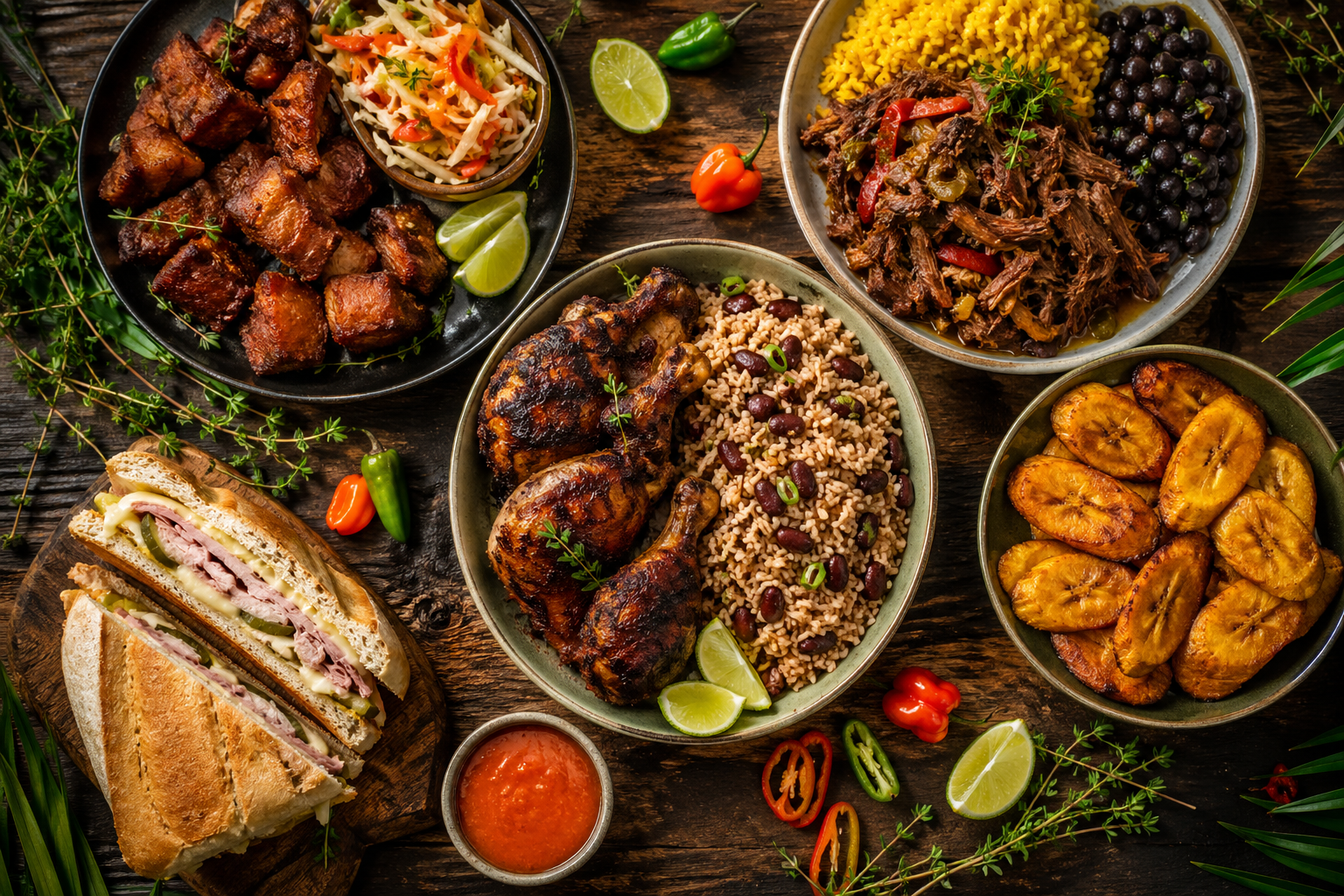
Limited dining? Tell that to the jerk chicken, the oxtail, the griot with pikliz, and the doubles. All within a 5-minute drive of the World Cup stadium.
Time Out published their 2026 World Cup Miami guide last week. It's thorough. Match schedule, ticket pricing, transportation tips, hotel recommendations. Professional work. And then, tucked into the practical logistics section, this sentence: "Miami Gardens is a largely residential suburb, and not a tourist destination in its own right with limited dining or nightlife in the immediate stadium vicinity."
We read it twice to make sure we weren't imagining things. Then we read it a third time while eating a $12 plate of curry goat with rice and peas from a restaurant that Time Out's writers apparently don't know exists.
Look, we understand where this comes from. Time Out is a global publication that covers cities through a visitor lens. Their Miami coverage centers on South Beach, Wynwood, Brickell, the Design District. When they look at Miami Gardens, they see a residential city without a cocktail bar that charges $22 for a mezcal spritz. By their framework, that means "limited dining." By ours, it means they've never driven down NW 27th Avenue with the windows open and followed the smoke.
Let's talk about "limited dining"
Miami Gardens has one of the most distinctive food scenes in South Florida. It's not the kind that gets written up in Bon Appetit or featured on Netflix food shows. It's the kind that feeds a community of 112,000 people from Jamaica, Haiti, Trinidad, the Bahamas, Cuba, the Dominican Republic, and the American South. It's walk-up windows and family-run kitchens and plates that cost $10-$15 and fill you up for the rest of the day.
Here's what Time Out's writers would find if they drove 17 miles north from their South Beach hotel and actually explored the city hosting the World Cup:
Jamaican jerk chicken smoked over pimento wood and served with festival and rice cooked in coconut milk. Haitian griot with pikliz that clears your sinuses and rewires your understanding of pork. Trinidadian doubles for $3 that are more satisfying than any $18 appetizer in Brickell. Oxtail that's been braising since morning and falls apart when you look at it. Soul food from steam trays at cafeteria-style spots where the mac and cheese has a crust on top and the collard greens have been seasoned by someone's grandmother. Dominican mangu and Cuban sandwiches and Bahamian conch salad made with seafood that came off a boat the same day.
That's "limited dining" if the only restaurants that count are the ones with a sommelier and a reservations app. For the rest of us, and for the hundreds of thousands of World Cup visitors about to discover what Caribbean food actually tastes like when it's made by Caribbean people, it's the best food corridor within 5 miles of any World Cup stadium in the country.
We wrote a full guide to the restaurants. Time Out could start there.
And "not a tourist destination"?
Hard Rock Stadium hosts the Formula 1 Miami Grand Prix (275,000 fans), the Miami Open (world-class tennis for two weeks), the Miami Dolphins (eight NFL Sundays), and in 28 days, seven FIFA World Cup matches including Brazil, Portugal, Colombia, and potentially Argentina. The stadium campus generated $1.5 billion in economic impact over four years from the Grand Prix alone. Stephen Ross valued the operation at $12.5 billion.
That stadium sits in Miami Gardens. Not Miami. Not Miami Beach. Not Wynwood. Miami Gardens, Florida 33056.
If a city hosting the World Cup, the Grand Prix, and the Super Bowl champion Chiefs in its NFL home opener isn't a "destination," then the word has lost all meaning. What Time Out meant is that Miami Gardens isn't a nightlife destination in the way South Beach is. Fair enough. We don't have LIV or E11EVEN. We have Betty T. Ferguson Recreational Complex and Rolling Oaks Park and a barbershop culture that would teach Time Out's culture editors more about community than a year of rooftop bar reviews.
We wrote 25 things to do in Miami Gardens. Not hypothetical things. Real things that real people do on real weekends.
What Time Out got right
To be fair, Time Out's guide has genuinely useful information. Their ticket pricing data is current (group stage resale starting at $330-$500, Brazil vs. Scotland at $1,600+). Their transportation section mentions the free county shuttles we covered last week. Their recommendation to stay in Aventura for Brightline access aligns with our hotel guide.
And they're not wrong that Miami Gardens doesn't have a conventional nightlife scene. If you're looking for clubs and rooftop bars within walking distance of the stadium, you'll need to drive south to Wynwood or east to Hollywood. We said the same thing in our living in Miami Gardens guide. The difference is that we said it with context and respect. Time Out said it with a shrug.
What this tells you about World Cup coverage
Time Out's characterization isn't unique. Most national and international World Cup guides treat Miami Gardens the same way: a place where the stadium is, not a place where people live. The matches happen here. The visitor spending happens in Miami Beach. The media coverage mentions the stadium address but describes the experience in terms of South Beach hotels and Brickell restaurants.
That dynamic is exactly what we've been writing about for weeks. The Grand Prix outearns the Dolphins but the spending flows elsewhere. The Super Bowl can't come back but the reasons are about stadium infrastructure, not community investment. The football team is rebuilding while the campus has never been more profitable.
Miami Gardens hosts the events. Other people write about them. Other neighborhoods capture the spending. That pattern doesn't change until publications like Time Out are given a reason to look past the stadium gates and actually see the city. Which is why we're here.
An invitation to Time Out's editors
This isn't a callout. It's an invitation. Come to Miami Gardens before the World Cup starts. We'll take you on the NW 27th Avenue food crawl we recommended in our restaurant guide. Jerk chicken, griot, doubles, oxtail, and a bakery stop for coco bread. Total cost: under $30. Total Time Out rating if you wrote it up honestly: probably a 9 out of 10.
We'll show you the parks, introduce you to the people who run Carol City's community institutions, and explain why 112,000 people chose to live in a city that your guide dismissed in a single sentence.
The World Cup is in 28 days. The matches are in our city. The food is on our streets. The community is in our neighborhoods. If Time Out wants to update their guide with the version that includes the parts they missed, we're an email away: david@miamigardens.com.
In the meantime, we'll keep doing what we do: writing about Miami Gardens for the people who live here, the visitors smart enough to explore beyond the stadium walls, and apparently, the national publications who need the assist.
Read our full coverage: Restaurant guide · 25 things to do · Parks guide · Carol City history · World Cup guide. Published: May 18, 2026.