The Dolphins Are Projected to Win 4.5 Games. The Stadium Has Never Made More Money. That Tells You Everything.
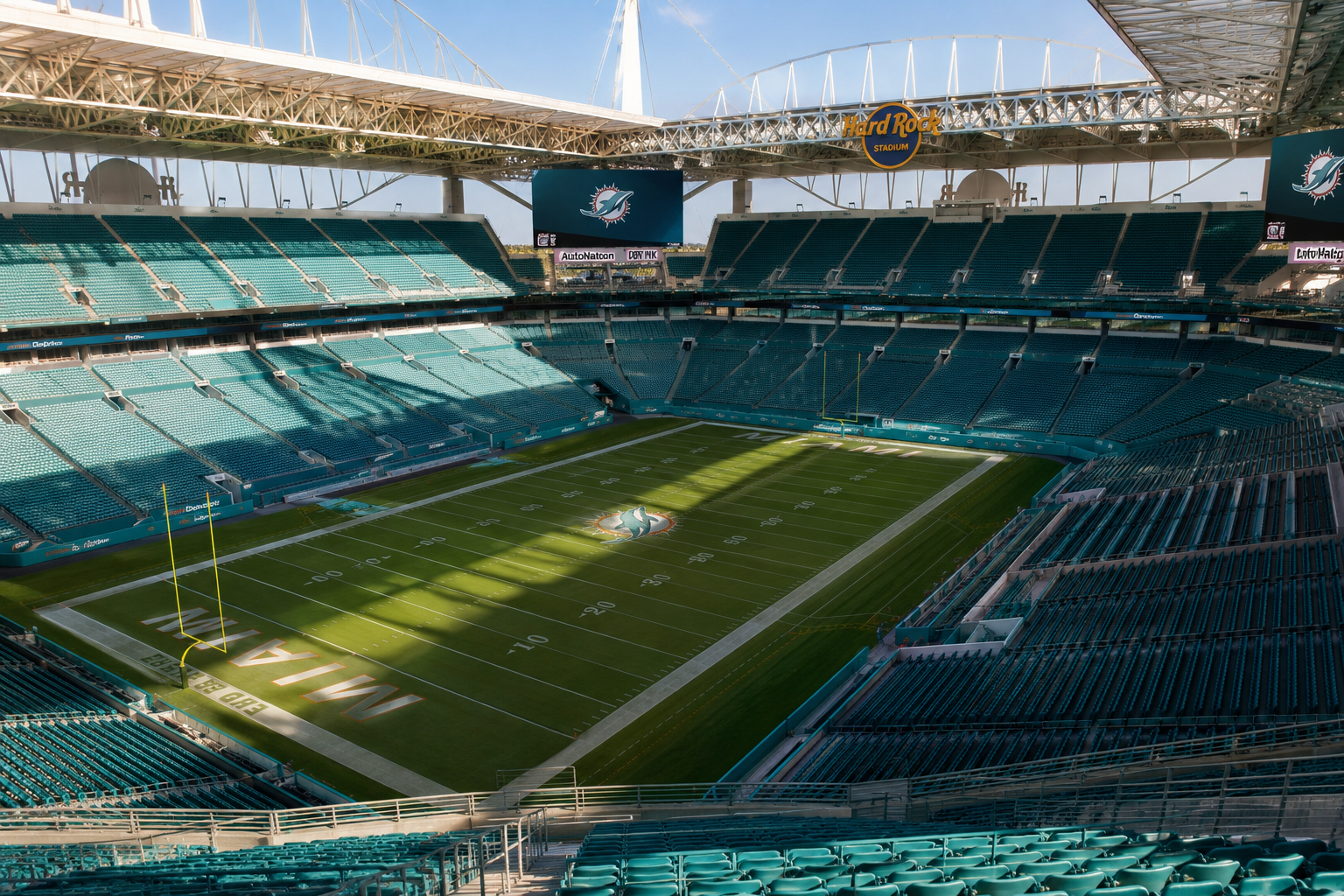
The stadium is worth $12.5 billion. The team is projected for 4.5 wins. Those two facts no longer contradict each other.
Somewhere in the last five years, the Miami Dolphins stopped being the point of Hard Rock Stadium. Not officially. Not in the press releases. But in the math. And the 2026 Dolphins schedule, released last week, makes the math impossible to ignore.
FanDuel set the over/under at 4.5 wins. ESPN gave them the second-hardest strength of schedule in the NFL. The league didn't award them a single primetime game. Not one. In a 17-game season with Thursday, Sunday, and Monday night windows to fill, the NFL looked at the Dolphins and decided America doesn't want to watch them at 8:15 on a school night. Nine of their 17 games are against 2025 playoff teams, including four against division champions.
And none of that matters to the bottom line.
The business case for a bad football team
In March, Stephen Ross sold a 1% stake in the holding company that controls the Dolphins, Hard Rock Stadium, the Miami Grand Prix, and the Miami Open for $125 million. That values the entire operation at $12.5 billion. Not the franchise alone. The campus. The ecosystem. The calendar.
To understand why a 4.5-win projection doesn't dent that valuation, you need to understand what Ross built. Over the last decade, he invested more than $1 billion of his own money to transform a football stadium into a 12-month revenue platform. The results, as he told CNBC in March:
The Grand Prix generates 25% more ticket revenue than the entire Dolphins season. In three days. 275,000 fans. One weekend in May. The contract runs through 2041.
The Miami Open fills the tennis complex for two weeks every spring. The World Cup brings seven matches and hundreds of thousands of international visitors this summer. Concerts, college football, the Formula 1 Miami Grand Prix, and corporate events fill the remaining gaps. The Dolphins play eight Sundays in the fall. They're one tenant in a year-round entertainment operation.
What 4.5 wins actually looks like
Let's be honest about what the projection means on the field. A 4- or 5-win season is not competitive football. It's a rebuild year under a first-year head coach (Jeff Hafley) with a roster gutted by salary cap casualties. The familiar faces are gone. The quarterback situation is unsettled. The defense is young. The schedule offers almost no soft spots.
A 4-5 win team plays games that feel irrelevant by October. Attendance dips. The lower bowl thins out during the fourth quarter. The energy at the stadium drops to a level that regular-season NFL games in warm-weather markets are notorious for. Visiting fans, particularly from passionate cold-weather fanbases (the Bills, the Bears, the Lions), may outnumber Dolphins fans in their own building for some of these games.
For fans who grew up watching Dan Marino or who remember the Wildcat formation or the brief Tua Tagovailoa era, this is painful. The Dolphins are a franchise with six consecutive losing seasons, no playoff wins since 2000, and a habit of inspiring hope in March and delivering disappointment by December.
But the franchise's football performance is no longer tethered to the stadium's financial performance. That's the structural change that Ross engineered, and the 2026 season is where the implications become fully visible.
The NFL knows this. That's why there are no primetime games.
When the NFL builds its schedule, primetime slots go to teams that draw national viewers. The Cowboys. The Chiefs. The Eagles. Teams with star quarterbacks, playoff expectations, and storylines that justify keeping 20 million people up past their bedtimes.
The 2026 Dolphins got zero. That's the league telling its broadcast partners that Miami isn't worth the risk. A 4.5-win team playing in a half-empty stadium on a Sunday afternoon is one thing. The same team playing to a national audience on Monday Night Football is a ratings liability.
The irony is that Hard Rock Stadium, the venue itself, is one of the most televised locations in American sports. The Grand Prix drew 2.4 million U.S. viewers on ABC. The World Cup matches will be broadcast to billions globally. The Miami Open reaches tennis audiences worldwide. The building is a star. The football team that calls it home is not.
What this means for Miami Gardens
For residents, the practical difference between a 4-win Dolphins season and a 12-win Dolphins season is almost nothing. The traffic on NW 199th Street is the same regardless of the score. The parking lots fill up either way (visiting fans will come for the experience even if the home team is losing). The economic activity around the stadium on game days doesn't scale with wins.
What does change is the emotional investment. A competitive team gives a city something to rally around. A losing team is just another event on the calendar, indistinguishable from a concert or a tennis match in terms of community engagement. Miami Gardens has never had a "our team is winning and the whole city feels it" moment with the Dolphins. The incorporation happened in 2003. The last Dolphins playoff win was in 2000. This city has never experienced a meaningful Dolphins postseason run as a municipal entity.
The World Cup this summer will be the closest thing. Seven matches. International teams. Global attention. Community energy. For five weeks, Hard Rock Stadium will feel like the center of the world. Then the World Cup ends, and the Dolphins begin a season that nobody outside of the immediate fan community expects to matter.
That contrast is the story of Hard Rock Stadium in 2026. The building has transcended the team. The address matters more than the roster. And the $12.5 billion valuation reflects a bet on the location, the climate, and the global event calendar, not on whether the Dolphins can cover a 7-point spread against the Bears in December.
The question Ross isn't answering
Here's what nobody in the organization will say publicly: does it serve the business model to have a competitive football team?
The cynical reading is that it doesn't. A bad team depresses ticket prices, which makes the venue more accessible for casual fans and corporate groups. A bad team creates no scheduling conflicts with the Grand Prix or the Miami Open, because nobody is fighting for dates around a 4-win football team. A bad team keeps payroll low, freeing capital for stadium infrastructure investments that generate higher returns than a quarterback's contract.
The less cynical reading is that Ross genuinely wants to win. He hired Jeff Hafley. He's investing in the draft. He retained key front-office personnel. The rebuild is real, not performative. But even the rebuild happens in the shadow of a business that no longer depends on the football team's results.
For Miami Gardens, the answer to the question matters less than the reality it produces. Whether the Dolphins win 4 games or 14, the stadium will keep generating billions. The events will keep coming. The traffic will keep flowing. And the community will keep navigating the gap between hosting the world's biggest events and living in a city where the median household income is $64,362.
That gap is the real story. The 4.5-win line is just the number that makes it impossible to look away.
Frequently asked questions
How many games are the Dolphins expected to win in 2026?
FanDuel set the over/under at 4.5 wins for the 2026 Dolphins season. ESPN ranked their strength of schedule second-hardest in the NFL, with nine games against 2025 playoff teams. The team has no primetime games scheduled, reflecting the league's assessment that they're not a competitive draw.
How much is Hard Rock Stadium worth?
In March 2026, Stephen Ross sold a 1% stake in the holding company controlling the Dolphins, Hard Rock Stadium, the Miami Grand Prix, and the Miami Open for $125 million, valuing the total operation at $12.5 billion. The valuation reflects the stadium's year-round event calendar, not just the football team's performance.
Does the Miami Grand Prix make more money than the Dolphins?
Yes. Stephen Ross confirmed on CNBC in March 2026 that the Miami Grand Prix generates 25% more ticket revenue than all eight regular-season Dolphins home games combined. The Grand Prix drew 275,000 fans over three days in 2025, and the contract runs through 2041.
Why don't the Dolphins have any primetime games in 2026?
The NFL schedules primetime games for teams projected to be competitive and draw national television audiences. The 2026 Dolphins, with a 4.5-win projection, a first-year head coach, and a roster depleted by salary cap cuts, were not considered a primetime-worthy matchup by the league and its broadcast partners.
This is an editorial reflecting MiamiGardens.com's analysis of publicly available data. Sources: CNBC, ESPN, FanDuel, Yahoo Sports, The Phinsider, CBS Miami. See also: Grand Prix vs. Dolphins revenue, Super Bowl eligibility, and full 2026 Dolphins schedule. Published: May 17, 2026.