The Florida Museum of Black History Could Be Built Right Next to Miami Gardens. Here's Why That Matters.
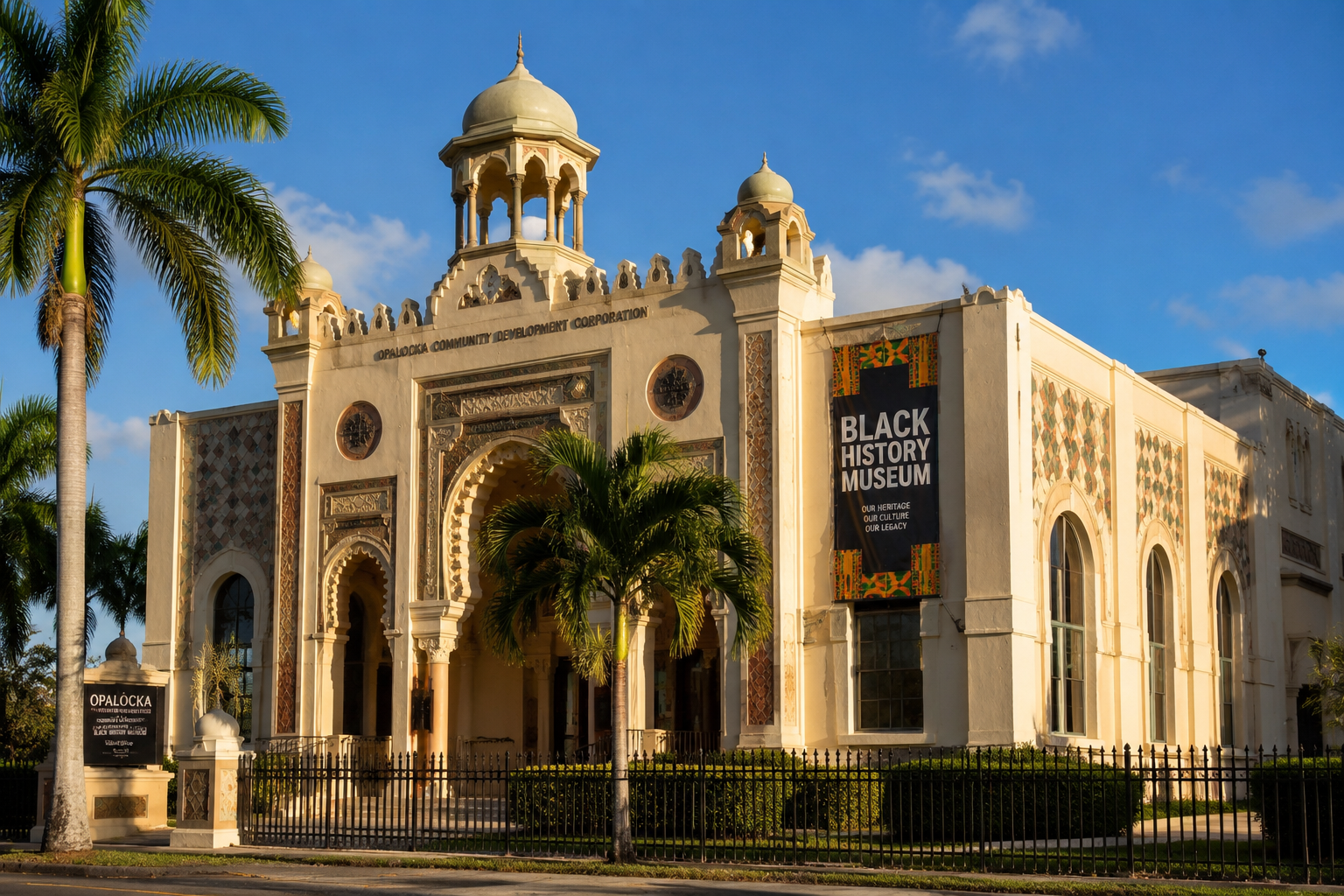
Opa-locka's Moorish Revival architecture and rich Black history make it a compelling candidate for the state's first Museum of Black History. The proposed site is a 10-minute drive from central Miami Gardens.
There's a fight happening at the state level that could put a world-class cultural institution on Miami Gardens' doorstep. Ten North Group, a nonprofit with 40 years of community development work, is leading a campaign to locate the Florida Museum of Black History in Opa-locka, a city that shares a border with Miami Gardens. The proposed site is a 4.5-acre property at 200 Opa-locka Boulevard, roughly 10 minutes from the heart of Carol City.
The competition is real. A state task force ranked St. Johns County (near St. Augustine) first, Eatonville (near Orlando) second, and Opa-locka third. The legislature approved $1 million for St. Johns planning. Then Governor DeSantis vetoed $750,000 in separate funding earmarked for Opa-locka's Black heritage development as part of a broader rollback of DEI-related spending. The bill to formalize St. Johns as the permanent site cleared the Senate but stalled in the House.
In other words: nobody has won yet. And the people making the case for Opa-locka aren't giving up.
Why Opa-locka says it should be here
Dr. Willie Logan, Ten North Group's president and CEO, has been making the same argument for three years, and the logic is hard to dismiss: put the museum where the people are.
Miami-Dade County draws 26 to 27 million visitors annually. St. Augustine draws 6 to 7 million. More than 40% of Miami-Dade visitors express interest in cultural and heritage tourism. The audience for a Black history museum is already here, arriving year-round on flights from across the hemisphere. St. Augustine offers Spanish colonial history and Fort Mose (the first free Black settlement in what would become the United States). That history is significant. But the living, breathing Black community that would sustain a museum with ongoing attendance, school field trips, community events, and cultural programming is concentrated in South Florida, not northeast Florida.
The proposed Opa-locka site has practical advantages the other finalists can't match. The existing 46,700-square-foot building at the Opa-locka Regional Service Center sits on a 4.5-acre state-owned property with roads, utilities, and compatible zoning already in place. It's steps from a Tri-Rail station. The site is shovel-ready. No land acquisition needed. No infrastructure buildout. No zoning changes.
Ten North Group's feasibility study makes the case bluntly: Opa-locka is the only finalist with an immediately buildable, fully controlled site.
Why the governor vetoed the funding
In the 2025-2026 state budget cycle, the legislature approved $750,000 for Black heritage development space in Opa-locka. State Senator Shevrin Jones (D-West Park) championed the funding. Governor DeSantis line-item vetoed it, along with roughly $600 million in other projects, including minority teacher scholarships and a mentorship program for Black students in South Florida.
The veto was part of Florida's compliance with the federal DEI rollback policy. Programs specifically designated for minority communities were removed from the budget across the board. The Museum of Black History itself wasn't directly defunded (the $1 million for St. Johns planning survived), but Opa-locka's path to building its own cultural space was set back significantly.
Ten North Group's response has been to pursue a separate legislative strategy. They have a bill in drafting, sponsored by representatives from both north Jacksonville and south Miami, in both chambers. Logan told WLRN that the organization planned to be in Tallahassee "in force" with three years of planning materials and their own completed feasibility study.
What the museum would look like
The proposal envisions a mixed-use development on the 4.5-acre site: four floors of exhibition space, an outdoor terrace, a community area, a theater, and a sculpture garden. Beyond the museum itself, the plan includes mixed-income housing, retail, commercial space, and a parking garage designed to catalyze economic development in Opa-locka's downtown core.
The curatorial vision, led by Dr. Babacar M'Bow (Ten North's curator), centers on the African diaspora's contributions to Florida's development. Exhibitions would trace Black history from pre-colonial Florida through Fort Mose, through Reconstruction, through the Great Migration, through the civil rights era, and into the present. Interactive exhibits, school partnerships, and community programming would give the museum daily relevance beyond its static collections.
Opa-locka's Historic City Hall, a Moorish Revival landmark across from the proposed site, could serve as a temporary museum while construction is underway. That means programming could begin before the permanent building is finished.
Why this matters for Miami Gardens
Miami Gardens is the largest predominantly Black city in Florida. Roughly 72% of its 112,000 residents are African American. Florida Memorial University, one of the state's oldest HBCUs, sits within city limits. Carol City's history stretches back to the 1960s Black migration from Liberty City. Bunche Park is named after the first Black Nobel Peace Prize winner. The cultural heritage is deep, documented, and deserving of institutional recognition.
A Museum of Black History in Opa-locka, 10 minutes from Carol City, would serve Miami Gardens residents in ways that a museum in St. Augustine (5 hours north by car) simply cannot. School field trips become day trips instead of overnight excursions. Community events become walkable or a short drive. The museum becomes a neighborhood institution, not a destination vacation.
The economic impact would also spill across the border. A cultural institution drawing hundreds of thousands of annual visitors would generate restaurant, retail, and hospitality spending in the surrounding communities. Miami Gardens businesses, particularly along the NW 27th Avenue corridor, would be positioned to capture that foot traffic.
Miami-Dade County's School Board has already passed a resolution supporting the Opa-locka site. Dr. Steve Gallon III, the District 1 board member who covers the Miami Gardens area, proposed the resolution, arguing that a local museum would enhance the teaching of African American history across the district's schools.
The political support behind the bid
The Opa-locka campaign has assembled significant political backing: State Senator Shevrin Jones, State Representative Ashley Gantt, Miami-Dade County Mayor Daniella Levine Cava, County Commission Chairman Oliver Gilbert III, Opa-locka Mayor John H. Taylor Jr., and U.S. Congresswoman Frederica Wilson have all publicly supported the bid. The Miami-Dade County Commission and Opa-locka City Commission passed formal resolutions endorsing the location.
The challenge isn't support. It's momentum. St. Johns County has $1 million in planning funding already in hand. The Florida Memorial University Foundation has signed a ground lease for the St. Augustine site. A Senate bill to make it official has cleared committee. If the House passes that bill, the decision is made.
Opa-locka's window is the legislative stall. The House hasn't moved on the St. Johns bill, mirroring the same impasse that blocked it last session. That gridlock is Opa-locka's opportunity to present its counter-case, its feasibility study, and its argument that the museum belongs where the community lives, not where the first historical marker was placed.
What happens next
The 2026 legislative session will determine whether St. Johns is formally designated or whether the competition stays open. Ten North Group's counter-bill is in drafting. If it gets filed and gains traction, the decision could be delayed for another year of deliberation. If it doesn't, St. Johns likely secures the site by default through continued funding appropriations.
For Miami Gardens residents who believe the museum belongs in this community, the action steps are straightforward: contact your state representative and senator, express support for the Opa-locka bid, and ask them to oppose the St. Johns formalization bill until a fair comparative analysis is completed. The political support exists. What's needed is constituent pressure to match it.
Frequently asked questions
Where will the Florida Museum of Black History be built?
The location has not been finalized. A state task force ranked St. Johns County (near St. Augustine) first, Eatonville (near Orlando) second, and Opa-locka (bordering Miami Gardens) third. The legislature approved $1 million for St. Johns planning, but a bill to formalize the site stalled in the House. Opa-locka's Ten North Group is pursuing a counter-legislative strategy and argues its site is the only shovel-ready option.
Why was funding for the Opa-locka museum site vetoed?
Governor DeSantis vetoed $750,000 earmarked for Black heritage development space in Opa-locka as part of a broader veto of DEI-related spending in the 2025-2026 state budget. The veto affected programs specifically designated for minority communities statewide, including minority teacher scholarships and mentorship programs.
How close is Opa-locka to Miami Gardens?
Opa-locka shares a border with Miami Gardens to the south. The proposed museum site at 200 Opa-locka Boulevard is approximately a 10-minute drive from central Carol City and central Miami Gardens. It's accessible via NW 27th Avenue and the Palmetto Expressway, and sits steps from a Tri-Rail station.
Who is behind the Opa-locka museum campaign?
Ten North Group, a nonprofit with 40 years of community development work, leads the Opa-locka bid. Its president, Dr. Willie Logan, has assembled support from State Senator Shevrin Jones, State Representative Ashley Gantt, Miami-Dade Mayor Daniella Levine Cava, County Commission Chairman Oliver Gilbert III, Congresswoman Frederica Wilson, the Miami-Dade School Board, and the Opa-locka City Commission.
Sources: WLRN, The Miami Times, NBC 6, South Florida Times, Ten North Group, Florida Legislature. See also: Carol City history, neighborhoods guide, and city council profile. Published: May 17, 2026.