Residents Said No. The Council Voted No. El Dorado Is Still Pushing to Rezone NW 44th Court. Here's What's Happening.
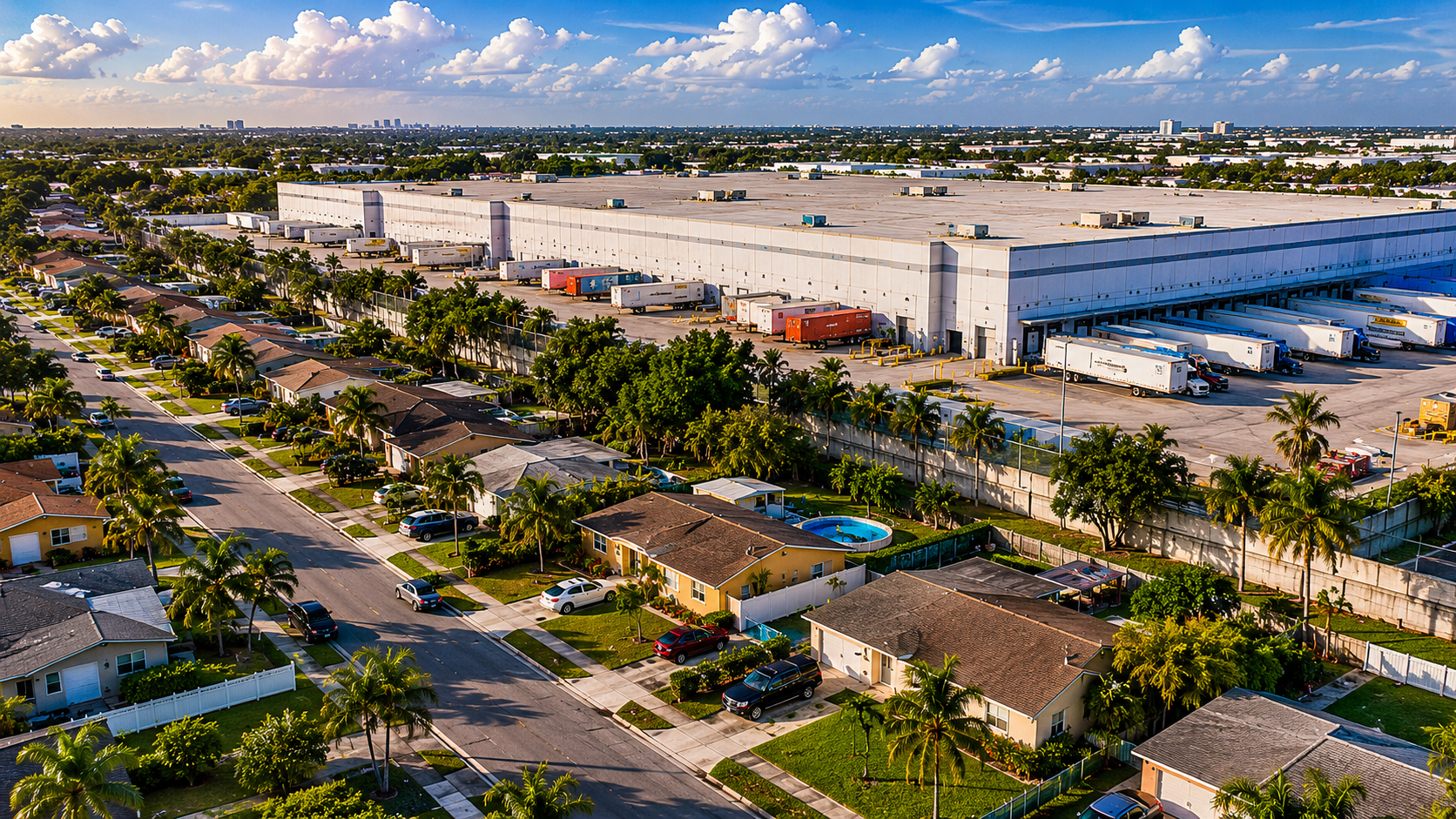
The 4.21-acre lot on NW 44th Court sits between single-family homes in Venetian Gardens and El Dorado's existing warehouse. Residents say the line between residential and industrial has been pushed far enough.
On Tuesday morning, Miami Gardens residents gathered outside El Dorado Furniture to protest. Again. The issue is the same one that packed city council chambers in March: a proposal to rezone a 4.21-acre parcel on NW 44th Court from single-family residential to industrial use so El Dorado can expand its warehouse operations.
The city council voted 4-3 to block the rezoning in March. Residents celebrated. But El Dorado hasn't walked away. The company's chief operating officer, Pedro Cabo, told CBS Miami this week that the mayor is endorsing the change because it "makes sense for their future plans." The fact that residents had to show up and protest again, two months after a council vote went their way, tells you everything about how zoning fights work in a city where commercial interests and residential neighborhoods sit on top of each other.
Here's the full story, from the land sale to the vote to the protest that happened yesterday.
How a residential lot became a corporate target
The parcel in question is located on NW 44th Court in the Venetian Gardens neighborhood, near Brandsmart USA and Florida Memorial University. It's currently zoned single-family residential. Homes stand on nearby lots. Kids walk to school on these streets. Residents have lived here for decades.
In 2022, El Dorado Furniture purchased the land from Florida Memorial University. According to Cabo, the company bought it "with the understanding that they would be able to expand their warehouse," because the county website already listed the parcel as a light industrial zone. Cabo claims the lot was "mislabeled" as residential when the City of Miami Gardens incorporated around 2013. He maintains it should never have been classified as residential in the first place.
Whether that's a legitimate mapping error or a convenient narrative depends on who you ask. What's not in dispute is the current zoning: the lot is classified as R-1, Single Family Residential. Changing it to heavy industrial requires a formal rezoning ordinance approved by the city council. El Dorado filed for that change. The community pushed back. Hard.
What happened in March: the council vote
The rezoning proposal first came before the city council in February and was debated through March. After weeks of community organizing, petitions, and public comment sessions that filled the council chambers, the vote came down on March 25.
The result: 4-3 against the rezoning.
| Council Member | Vote |
|---|---|
| Vice Mayor Robert Stephens III | NO (against rezoning) |
| Councilman Reggie Leon | NO |
| Councilwoman Katrina Baskin | NO |
| Councilwoman Dr. Michelle Powell | NO |
| Mayor Rodney Harris | YES (for rezoning) |
| Councilwoman Linda Julien | YES |
| Councilwoman Katrina Wilson | YES |
The two newest council members, Baskin and Powell, both voted with the community. Baskin, who campaigned on fresh initiatives and community accountability, and Powell, a doctor of osteopathic medicine who ran on public health and community activism, sided with residents on a vote where health and quality of life were the central arguments. Their presence on the council made the difference. Under the previous council composition, this vote may well have gone the other way.
Why residents are fighting this
The opposition isn't abstract anti-development sentiment. It's grounded in specific, documented concerns about what expanding industrial operations would do to a residential neighborhood that already absorbs pollution from multiple sources.
Traffic and safety. Myya Passmore, a Venetian Gardens resident and community organizer, told the Miami Times that the neighborhood experienced seven accidents from cut-through traffic in two weeks, including two hit-and-runs and two cars that hit homes and a gate. Large trucks making wide turns on NW 42nd Avenue already disrupt traffic flow. Passmore warned the expansion could worsen conditions, particularly for children. "It's very dangerous for those kids," she told CBS Miami.
Air quality and health. Resident Lynette Hickenbottom, 73 years old and a two-time cancer survivor with asthma, told the council she checks the air quality index every morning because her survival depends on it. "I take asthma medications, and this is my survival every day," she said. "I must know that it's below 50 because if it's above 50, it's poor air quality."
Dr. Cheryl Holder, founder of Florida Clinicians for Climate Action, addressed the council directly. "Where you live, work and play is more impactful for your health than your DNA," she said. "Truck diesel exhaust releases fine particulate matter (PM2.5), which gets into children's lungs, increases the risk of asthma, lung disease, heart disease, and then cancer."
Environmental justice. Passmore framed the issue in terms of cumulative exposure. The Venetian Gardens area already sits near the Opa-locka Airport, the 826 Expressway, a Miami-Dade Public Schools bus depot, and an existing industrial and commercial district. She cited the city's own Land Development Regulations, which state that potential harms should not be overlooked just because they are "indirect, intangible or not readily quantifiable."
"We are facing a triple threat of emissions," Passmore told the council. "This is our health."
Hickenbottom, who CBS Miami reported also joined Tuesday's protest, identified the community being squeezed as Black and brown. "The increase in industry is squeezing in the community," she said.
What El Dorado says
El Dorado's position is that the expansion is minor, the impact is minimal, and the community's fears are overblown.
Cabo told CBS Miami the company has been in the community for decades and does a lot to help. He maintained the project is "light industrial" with no smokestacks or manufacturing. He said there will be no additional traffic on NW 44th Court because the expansion doesn't create a new facility entrance there. Bill Pfeffer of Bowman Consulting, representing El Dorado, told the council the traffic study showed the expansion "would only add seven peak hour trips" because all deliveries originate from off-site showroom sales.
City planning and zoning director Reginald White confirmed that El Dorado agreed to add a landscaped buffer wall, connect sidewalks in front of the site, relocate commercial vehicle areas away from NW 44th Court, and enter a restrictive covenant limiting the site to warehouse use only.
Those concessions were not enough for residents, and they were not enough for four of the seven council members.
Why residents are protesting again
The March vote should have been the end of it. In most zoning disputes, a defeated rezoning stays defeated. But Cabo's statement to CBS Miami that "the mayor is endorsing the change because it makes sense for their future plans" suggests El Dorado intends to bring the proposal back, possibly with modifications or through a different procedural path.
That's why residents showed up outside El Dorado on Tuesday. Not to celebrate a victory. To defend one.
Keisha Guyton, who was at both the March council meeting and Tuesday's protest, told CBS Miami: "We have already enough pollutants in the area that is already cramming our lungs. So we don't want to add more to it."
The protest sends a message to both the company and the council: the community is watching, the organizing infrastructure is in place, and any attempt to reverse or circumvent the March vote will be met with the same resistance that defeated it the first time.
What this means for Miami Gardens
The NW 44th Court fight is a microcosm of a tension that runs through the entire city. Miami Gardens was incorporated in 2003 by residential communities that wanted local control over the decisions affecting their neighborhoods. Twenty-three years later, the stadium campus is a $12.5 billion entertainment empire, commercial development is pressing into residential blocks, and the question of who the city is being built for is alive in every zoning hearing, every council vote, and every protest outside a furniture store on a Tuesday morning.
The Venetian Gardens residents who organized against this rezoning did something that matters beyond their neighborhood. They showed that community pressure works. They showed that the new council members they elected (Baskin and Powell) will vote with them when the stakes are clear. And they showed that a 73-year-old cancer survivor holding up her asthma medications at a council podium can carry more weight than a corporate traffic study.
Whether El Dorado comes back with a new proposal remains to be seen. If they do, Venetian Gardens will be ready. As Guyton said after the March vote: "The power of the people is greater than the people in power."
We'll update this article if a new rezoning application is filed or if the council revisits the issue. If you live in Venetian Gardens or near the NW 44th Court parcel and have information to share, contact us at david@miamigardens.com.
Frequently asked questions
What is the El Dorado rezoning in Miami Gardens?
El Dorado Furniture proposed rezoning a 4.21-acre parcel on NW 44th Court near Venetian Gardens from single-family residential (R-1) to heavy industrial use to expand its warehouse operations. The company purchased the land from Florida Memorial University in 2022. The Miami Gardens City Council voted 4-3 to block the rezoning on March 25, 2026, after weeks of community organizing and public opposition.
Did the Miami Gardens council block the El Dorado rezoning?
Yes. On March 25, 2026, the council voted 4-3 against the rezoning ordinance. Vice Mayor Robert Stephens III, Councilman Reggie Leon, and Councilwomen Katrina Baskin and Dr. Michelle Powell voted no. Mayor Rodney Harris, Councilwoman Linda Julien, and Councilwoman Katrina Wilson voted yes. However, El Dorado has indicated it may pursue the rezoning again, prompting residents to protest outside the company on May 27.
Why are residents opposed to the El Dorado warehouse expansion?
Residents cite three main concerns: increased traffic in a neighborhood that already experiences cut-through accidents, health risks from diesel exhaust and PM2.5 particulate matter (particularly for children and residents with respiratory conditions), and the cumulative environmental burden on a community already near the Opa-locka Airport, the 826 Expressway, a school bus depot, and existing industrial operations. A doctor from Florida Clinicians for Climate Action testified that diesel exhaust increases risks of asthma, lung disease, heart disease, and cancer.
Where is the NW 44th Court rezoning parcel?
The 4.21-acre parcel is located on NW 44th Court in the Venetian Gardens neighborhood of Miami Gardens, near Brandsmart USA and Florida Memorial University. It is currently zoned R-1 (Single Family Residential) and is adjacent to El Dorado Furniture's existing warehouse and showroom facilities.
Sources: CBS News Miami (May 27, 2026), The Miami Times (Amelia Orjuela Da Silva, March 31, 2026), City of Miami Gardens Land Development Regulations. See also: city council profile, air quality guide, and living in Miami Gardens. Published: May 28, 2026.